

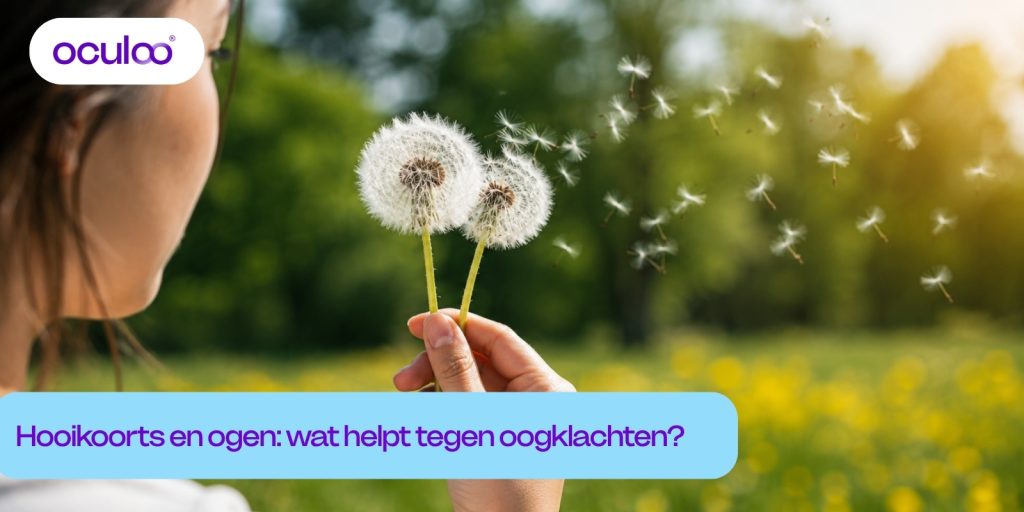
Hay fever and eyes: what helps against eye complaints?
Itchy, red and watery eyes are among the best-known symptoms of hay fever. Especially on days with high pollen counts, the eyes can become severely irritated. The natural reaction is often to rub the eyes, but this can actually make the symptoms worse.
What exactly happens to your eyes with hay fever and what can you do to reduce the symptoms?
Why do you get eye complaints from hay fever?
Hay fever is an allergic reaction to pollen from trees, grasses and plants, among others.
When pollen comes into contact with the mucous membranes of someone who is sensitive to it, the immune system reacts. This releases substances such as histamine. This reaction can cause symptoms in the nose, airways and eyes.
The eyes are in direct contact with the outside air. As a result, pollen can easily end up on and around the eye.
Symptoms of hay fever in the eyes
Eye complaints caused by hay fever can occur in one or both eyes. Common symptoms are:
- Itchy eyes
- Red eyes
- Watery eyes
- Burning or stinging eyes
- Swollen eyelids
- An irritated feeling around the eyes
- Sensitivity to light
The intensity of the symptoms can change during the pollen season. On dry and windy days, for example, more pollen may be present in the air.
Why is it better not to rub your eyes?
With severe itching, it is tempting to rub the eyes. Yet this is usually not a good idea.
Rubbing can irritate the eye further. In addition, pollen on your hands can end up around the eye again.
So try to touch your eyes as little as possible and wash your hands regularly.
What helps against hay fever in the eyes?
Reducing contact with pollen can help limit symptoms.
For example, take into account days on which a lot of pollen is expected. Outdoors, sunglasses can help to somewhat limit the direct exposure of the eyes to wind and pollen.
It can also be wise to wash your face after being outside for a longer period and not to place clothing that may have pollen on it in the bedroom.
Eye drops for hay fever
Eye drops can be used for eye complaints caused by hay fever. There are various types of drops, including moisturising eye drops and medicines specifically intended for allergic eye complaints.
Not every product is suitable for everyone. If in doubt, therefore ask your pharmacy, GP or other healthcare professional which eye drops are suitable in your situation.
Always use medicines according to the package leaflet and the instructions of your doctor or pharmacist.
How do you use eye drops for hay fever?
Wash your hands before applying eye drops and prevent the nozzle of the bottle from touching your eye, eyelashes or skin.
Tilt your head slightly back and, if necessary, gently pull down the lower eyelid. Then apply the prescribed amount of eye drops.
For many people this sounds simpler than it is in practice. Aiming, keeping the eye open and squeezing the bottle all at the same time can be difficult.
When applying eye drops on your own is difficult
Especially when eye drops have to be used several times or over a longer period, a good dropping technique is important.
People with less hand strength, shaking hands or limited vision may have extra difficulty positioning and operating an eye drop bottle.
An eye drop aid can help you gain more control while applying drops.
More control when applying eye drops
Do you regularly use eye drops during the hay fever season and find it difficult to apply them yourself? The Oculoo eye drop glasses assist in positioning and operating the eye drop bottle. This means you do not have to hold the bottle entirely unsupported above the eye.
Related blogs
Oogdruppels bij hooikoorts: welke helpen tegen jeukende ogen?
Last van jeukende, rode of tranende ogen door hooikoorts? Lees welke oogdruppels kunnen helpen, hoe u ze gebruikt en wanneer…

Droge ogen druppelen: hoe vaak en hoe doet u het goed?
Droge ogen zijn een van de meest voorkomende oogklachten in Nederland, vooral bij mensen boven de 50. Kunsttranen of andere…