

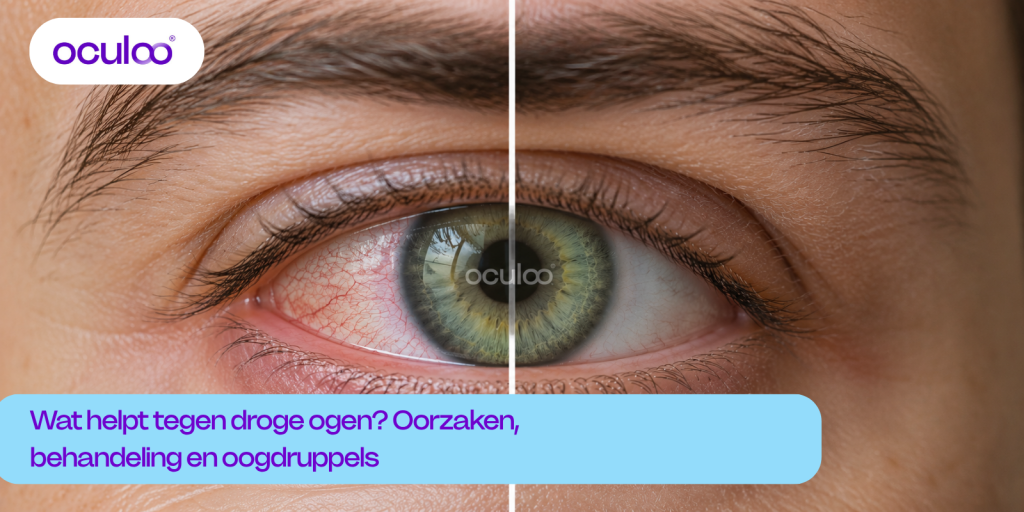
What helps against dry eyes? Causes, treatment and eye drops
Do you regularly suffer from burning, stinging or tired eyes? Then there is a good chance you have dry eyes. This condition is common and can develop at any age, although ophthalmologists see the symptoms more often in people over 50. Prolonged screen use, contact lenses and certain medicines can also cause the eyes to dry out.
Fortunately, dry eyes can usually be treated well. In this article you can read what causes dry eyes, which symptoms are involved, what you can do yourself and when it is wise to contact an ophthalmologist.
What are dry eyes?
Your eyes are continuously protected by a thin layer of tear fluid. This tear film may seem unimportant, but it plays a major role in keeping your eyes healthy. The tear film keeps the eye moist, protects against dust and bacteria and makes sharp vision possible.
With dry eyes, this tear film becomes unbalanced. This can have various causes. Sometimes the tear glands produce insufficient tear fluid. In other cases the tear fluid evaporates too quickly or the composition of the tear film is not optimal.
When the tear film offers insufficient protection, the surface of the eye dries out. This can cause irritation, redness and other symptoms.
Notably, dry eyes can actually cause extra watery eyes. This sounds contradictory, but it is a natural reaction of the eye to irritation. However, these reflex tears have a different composition than normal tears and usually do not solve the underlying problem.
How does the tear film work?
The tear film consists of three layers that work together to keep the eye healthy.
The outer oily layer prevents the tear fluid from evaporating too quickly. The middle watery layer provides sufficient moisture and transports oxygen and nutrients to the eye. The inner mucous layer ensures that the tear fluid spreads evenly across the eye.
When one of these layers does not function properly, the tear film can become unstable. This causes symptoms associated with dry eyes.
What are the symptoms of dry eyes?
Not everyone experiences the same symptoms. Some people only have complaints at the end of the day, while others experience them almost continuously.
Common symptoms are:
- burning eyes;
- stinging eyes;
- a sandy or gritty feeling;
- red eyes;
- tired eyes;
- fluctuating blurred vision;
- light sensitivity;
- watery eyes;
- irritation with contact lenses.
Many people notice that the symptoms worsen during prolonged screen work, reading, driving or when they are in rooms with dry air or air conditioning.
What causes dry eyes?
Dry eyes can have various causes. Often several factors play a role at the same time.
Age
As we get older, the production of tear fluid gradually decreases. As a result, dry eyes are more common in people over 50.
Prolonged screen use
When you work at a computer, you blink far less often than usual. This causes the tear film to evaporate faster and dry eyes to develop. People who work at a screen for several hours a day in particular regularly suffer from this.
Medicines
Some medicines have dry eyes as a possible side effect. This applies to certain antihistamines, antidepressants, diuretics and blood pressure medication, among others.
Not sure whether your medication affects your eyes? Discuss this with your GP or pharmacist. Never stop taking prescribed medicines on your own initiative.
Contact lenses
Contact lenses can disturb the natural tear film. As a result, the eyes feel drier and lenses can be less comfortable to wear.
Eye conditions
People with glaucoma, eyelid inflammation or disorders of the tear glands more often suffer from dry eyes. Prolonged use of certain eye drops can also irritate the eye surface.
After cataract surgery
After cataract surgery many people temporarily experience dry eyes. During recovery the eye is more sensitive and the tear film is temporarily disturbed. That is why the ophthalmologist often prescribes eye drops to support recovery.
Who is more likely to get dry eyes?
Anyone can develop dry eyes, but some groups are at greater risk.
Dry eyes are more common in older people, women after menopause, people who work a lot at a screen and contact lens wearers. People with diabetes, rheumatism or thyroid conditions also suffer from dry eyes more often.
In addition, dry eyes can be caused by dry air, air conditioning, cigarette smoke or a lot of wind.
How does an ophthalmologist make the diagnosis?
When symptoms persist for a longer period, an ophthalmologist can investigate what is causing the dry eyes.
The ophthalmologist first discusses your symptoms and then looks at the quality of the tear film. Sometimes it is measured how much tear fluid your eyes produce or how quickly the tear film evaporates.
Based on this research, it can be determined which treatment is most suitable.
What helps against dry eyes?
The treatment depends on the cause and the severity of the symptoms.
For many people, artificial tears are the first step. These eye drops supplement the natural tear fluid and help keep the eye better moisturised.
For more severe symptoms an eye gel can be prescribed. This stays on the eye longer and is often used before going to sleep.
If you have to apply drops several times a day, an ophthalmologist often recommends preservative-free eye drops. These are gentler on the eye surface and suitable for long-term use.
Sometimes the cause lies in an eyelid inflammation or another condition. In that case the treatment will focus on the underlying problem.
What can you do yourself about dry eyes?
Besides eye drops, simple adjustments in daily life can make a big difference.
Try to take regular breaks during screen work and consciously blink more often. Also make sure you drink enough and prevent dry air from being blown directly onto your face by a fan or air conditioning.
If you are outdoors a lot, sunglasses can help protect the eyes against wind. Good humidity in the home also contributes to a more comfortable feeling.
Although these measures do not always completely resolve dry eyes, they can often reduce the symptoms.
Using eye drops for dry eyes
For many people, eye drops are an important part of the treatment. Yet research shows that applying eye drops correctly is by no means always easy.
People regularly miss the eye, squeeze several drops out of the bottle at once or accidentally touch the eye with the packaging. As a result, not enough fluid always ends up in the right place.
For people who use eye drops daily, for example for dry eyes or glaucoma, an aid such as the Oculoo eye drop glasses can help. It positions the bottle above the eye, making it easier to apply drops independently and accurately.
Dry eyes with glaucoma
Many people with glaucoma use eye drops daily to lower the eye pressure. Prolonged use of this medication can cause dry eyes or worsen existing symptoms.
Always discuss persistent symptoms with your ophthalmologist. Sometimes a different type of eye drop or a preservative-free variant can provide relief.
Always use glaucoma medication as prescribed and never stop without consultation.
Dry eyes after cataract surgery
After cataract surgery it is normal for the eye to feel temporarily drier. During recovery you are often prescribed anti-inflammatory eye drops and sometimes artificial tears.
Proper and consistent application of these eye drops contributes to a smooth recovery. When applying drops is difficult, an aid can offer support.
Frequently asked questions
Do dry eyes go away by themselves?
That depends on the cause. Temporary symptoms due to dry air or intensive screen use often disappear by themselves. Chronic dry eyes usually require long-term treatment.
Are dry eyes dangerous?
Usually not. However, dry eyes left untreated for a long time can lead to irritation or damage to the eye surface. That is why it is wise to take persistent symptoms seriously.
Why do my eyes water when they are dry?
The eye produces extra reflex tears in response to irritation. These tears protect the eye less well than the normal tear film.
Which eye drops are best?
That differs per person. Artificial tears are often the first choice, but for more severe symptoms an eye gel or another treatment may be needed. Ask your ophthalmologist or pharmacist for advice.
When should I see my GP or ophthalmologist?
Get in touch when symptoms persist longer, your vision deteriorates, you experience pain or when eye drops do not help enough.
Conclusion
Dry eyes are a common condition that can have various causes. Age, screen use, medicines, contact lenses and eye conditions often play a role. Fortunately, the symptoms can usually be treated well with the right eye drops and a few simple adjustments in daily life.
Do you use eye drops regularly and find that applying them remains difficult? Then an aid such as the Oculoo eye drop glasses can help you apply eye drops more accurately, comfortably and independently.
Make applying eye drops easier
Would you like to know how the Oculoo eye drop glasses work?
Related blogs

Droge ogen druppelen: hoe vaak en hoe doet u het goed?
Droge ogen zijn een van de meest voorkomende oogklachten in Nederland, vooral bij mensen boven de 50. Kunsttranen of andere…

Oogdruppelen: hoe doet u het correct en zelfstandig?
Oogdruppelen is voor veel mensen lastiger dan het lijkt. Toch is correcte toediening essentieel voor het effect van uw medicatie.…