

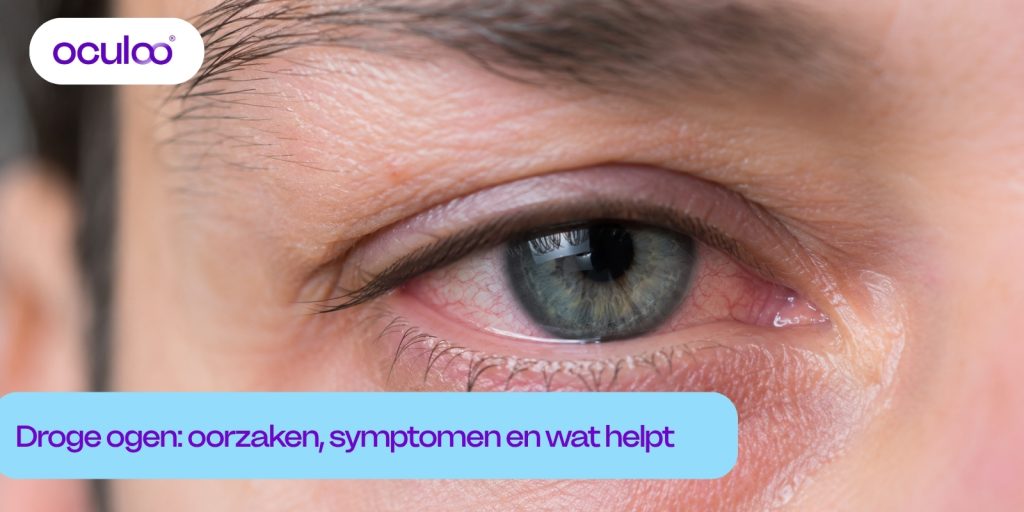
Dry eyes: causes, symptoms and what helps
Dry eyes are common and can be quite bothersome. Your eyes may feel burning, tired or irritated. Some people, on the other hand, experience noticeably watery eyes. Although dry eyes are usually not serious, the symptoms can affect reading, driving, screen work and other daily activities.
But what actually causes dry eyes? Which symptoms come with it? And what can you do yourself to reduce the complaints?
What are dry eyes?
A healthy tear film keeps the surface of the eye moist and protects the eye against dehydration and dirt. Every time you blink, the tear fluid is spread across the eye.
With dry eyes, this system does not work optimally. For example, too little tear fluid is produced or the tear fluid present evaporates too quickly. As a result, the eye surface can dry out and become irritated.
Dry eyes can occur temporarily, but in some people the symptoms are long-lasting or return regularly.
What are the symptoms of dry eyes?
The symptoms differ from person to person. Common symptoms of dry eyes are:
- A burning or stinging sensation
- Red or irritated eyes
- The feeling that there is sand or dust in the eye
- Tired or heavy eyes
- Blurred vision, especially after prolonged reading or screen use
- Sensitivity to light
- Sticky eyes
- Difficulty with contact lenses
- Watery eyes
That last one seems contradictory. Yet dry eyes can actually lead to extra tear production. The eye then responds to the irritation by producing more tear fluid.
What causes dry eyes?
Dry eyes can have various causes. Age, for instance, plays an important role. As we get older, the production and composition of tear fluid can change.
Looking at a screen for long periods can also cause or worsen symptoms. During computer or phone use, people often blink less. As a result, the tear film is renewed less often and can evaporate more quickly.
Other possible factors are dry air, air conditioning, heating, wind, smoke and prolonged wearing of contact lenses.
Certain medicines and conditions can also affect tear production. With persistent or severe symptoms, it is therefore wise to consult a doctor, optometrist or ophthalmologist.
Dry eyes from screen use
Screens are not automatically the cause of dry eyes, but prolonged screen use can intensify the symptoms.
When you look at a screen with concentration, you generally blink less often. As a result, the tear fluid is spread less well across the eye.
It can help to consciously look away from the screen regularly and to blink more often. A good working distance, sufficient humidity and avoiding direct air flows towards the face can also contribute to more comfort.
What helps against dry eyes?
What helps against dry eyes depends on the cause and severity of the symptoms.
With mild symptoms, simple adjustments can already make a difference. For example, try to take sufficient breaks during screen work, avoid dry air where possible and make sure fans or air conditioning are not aimed directly at your face.
In addition, moisturising eye drops or artificial tears are often used for dry eyes. These can help keep the eye surface moist and reduce symptoms.
There are different types of eye drops for dry eyes. Which variant is suitable depends among other things on the cause and severity of the symptoms and how often you need to apply drops. If in doubt, ask your pharmacy, optometrist, doctor or ophthalmologist for advice.
Using eye drops for dry eyes
Those who use eye drops regularly sometimes notice that the eye complaints are not the only challenge. Actually getting the drop into the eye can be difficult too.
You have to position the bottle above the eye, keep the eye open and at the same time apply enough force to get a drop out of the bottle.
Older people in particular and people with reduced hand strength, trembling hands or limited vision can find this difficult. As a result, a drop may end up beside the eye or it may be hard to apply drops independently.
An eye drop aid can provide support in positioning and operating the eye drop bottle.
When to see a doctor about dry eyes?
Dry eyes can often be treated well, but long-lasting or severe eye complaints deserve attention.
Contact a doctor or eye care professional when the symptoms persist, keep getting worse or when you experience clear pain, strong redness, sudden changes in vision or other unexpected eye complaints.
Always use prescribed eye medication according to the advice of your doctor or pharmacist.
Applying eye drops independently with dry eyes
Do you regularly use eye drops for dry eyes, but find it difficult to position the bottle properly above your eye or to squeeze it? The Oculoo eye drop glasses were developed to make applying eye drops independently easier. The glasses support the positioning of the bottle and help you operate it in a controlled way.
Related blogs

Droge ogen druppelen: hoe vaak en hoe doet u het goed?
Droge ogen zijn een van de meest voorkomende oogklachten in Nederland, vooral bij mensen boven de 50. Kunsttranen of andere…
Hoe lang zijn oogdruppels houdbaar na openen?
Hoe lang zijn oogdruppels houdbaar na openen? Lees alles over bewaartijd, koelkast, besmetting en wanneer u oogdruppels moet weggooien.